Showing posts with label Honda. Show all posts

Tuesday, June 28, 2011

2011 Honda Sport Cars Hybrid CR-Z Mugen Concept

2011 Honda Sport Cars Hybrid CR-Z Mugen Concept
Twelve modified 2011 Honda CR-Z sport hybrid coupes are featured prominently in the Honda booth at the 2010 SEMA Show, LAS VEGAS, which opens today. The 2011 Honda Sport Cars Hybrid CR-Z Mugen Concept is the sporty evolution of the Honda CR-Z, prepared by the Japanese Mugen Motorsports, officially associated with Honda. Honda has teamed up with Mugen again for a new hotrod special - but this one's a hybrid. The new 2011 Honda Sport Cars Hybrid CR-Z Mugen Concept is a slightly more ecologically sound proposition than the banzai 2009 Civic Type R Mugen, and brings the race car treatment to Honda's hybrid coupe.
2011 Honda Sport Cars Hybrid CR-Z Mugen Concept
As the first available sport hybrid, the 2011 Honda Sport Cars Hybrid CR-Z Mugen Concept demonstrates new opportunities for vehicle personalization among the import tuner community. Several significant vehicles are being unveiled at the show, including a 2011 CR-Z equipped with MUGEN* accessories, the Honda Performance Development, Inc. (HPD) CR-Z Hybrid R Concept, the HPD CR-Z Racer and several vehicles equipped with Honda Genuine Accessories.
2011 Honda Sport Cars Hybrid CR-Z Mugen Concept
Also unveiled today were two concept vehicles from HPD: the CR-Z Hybrid R Concept and the HPD CR-Z Racer. Though neither vehicle is intended for sale, HPD, Honda’s North American racing company, was determined to demonstrate the potential of the CR-Z for both street and racing performance. Both vehicles share many performance enhancements, with the CR-Z Hybrid R Concept highlighting Honda-designed street styling and the HPD CR-Z Racer opting for serious racing capability. To demonstrate that capability, HPD will campaign two HPD CR-Z Racers at the 25 Hours of Thunderhill endurance race in December. HPD enhancements to both cars include: a turbocharger and upgraded IMA™ hybrid system, resulting in an estimated combined 200 horsepower and 175 lb-ft. of torque; performance clutch; limited-slip differential; ‘circuit-tuned’ suspension; upgraded brakes and aerodynamic components.
2011 Honda Sport Cars Hybrid CR-Z Mugen Concept
Two vehicles were on display to demonstrate currently available Honda Genuine Accessories. For the 2011 Honda Sport Cars Hybrid CR-Z Mugen Concept, Honda displayed a vehicle equipped with 17-inch alloy wheels; side, front lip and tailgate spoilers; a rear diffuser; an illuminated door-sill trim and an interior armrest. Additionally, a 2010 Accord Coupe equipped with dealer-installed Honda Factory Performance™ (HFP™) components melded a distinctive, custom appearance with an enhanced level of handling performance. All Honda Genuine Accessories offer the same 3-year/36,000 mile bumper-to-bumper warranty as the rest of the vehicle, when installed at the time of new vehicle purchase, and are engineered to be fully compatible with each Honda vehicle.
2011 Honda Sport Cars Hybrid CR-Z Mugen Concept
Mugen Euro has developed a highly-tuned version of the Honda CR-Z that aims to deliver up to 200PS and 215Nm of torque by boosting the hybrid's petrol-electric powertrain. The goal of the project was to prove hybrid cars can be exciting to drive, by producing "Civic Type R-like" performance from the hybrid coupe while remaining sympathetic to the original Honda direction for the CR-Z. Torque Mugen Honda crz provide 50 percent greater power and use electric as the fuel. Obviously this is a good concept for a Honda hybrid sport cars. 2011 Honda Sport Cars Hybrid CR-Z Mugen Concept uses a 5-speed adjustable front and mounted on the back, which would increase the width base and weight of the settlement.
2011 Honda Sport Cars Hybrid CR-Z Mugen Concept
Colin Whittamore from Mugen Euro explains the philosophy behind the creation of the CR-Z Mugen: “We wanted a car that has genuine performance available at the touch of a button, but can perform just like a standard CR-Z and offer good fuel economy when the driver wishes. For that reason, we’ve kept the three driving modes, so the driver can select “eco” or “normal” to switch to economy and low emissions for daily driving, but press the Mugen button for the full-blown weekend-warrior settings”.
2011 Honda Sport Cars Hybrid CR-Z Mugen Concept
In addition, Mugen’s engineers also widened the 2011 Honda Sport Cars Hybrid CR-Z Mugen Concept’s front and rear tracks and fitted stiffer 5-step adjustable dampers and a limited slip differential to maximize traction. The Honda CR-Z Mugen stops courtesy of larger brake discs and 4-pot calipers. 2011 Honda Sport Cars Hybrid CR-Z Mugen Concept comes with sporty interior, there are Recaro sports seats, a different gear knob and a carbon rear view mirror cover, but your attention will be instantly drawn by the addition of three gauges that display water and oil temperature and pressure.
2011 Honda Sport Cars Hybrid CR-Z Mugen Concept
Among factors that features the sportiveness stands out the lowered bumper, a large roof spoiler and the carbon-fiber bonnet which, according to Honda, is an important technical detail. The weight of the 2011 Honda Sport Cars Hybrid CR-Z Mugen Concept then was reduced by more than 50 kg, through the use of lightweight materials as, again, the carbon-fiber, and first tests seem very positive.
2011 Honda Sport Cars Hybrid CR-Z Mugen Concept
The 2011 Honda Sport Cars Hybrid CR-Z Mugen Concept is purely a concept car at this stage, designed to demonstrate the potential and versatility of the Honda IMA system, with no confirmed plans for further production. Mugen and Honda (UK) will consider media and customer feedback before deciding on any next steps.
Read More...

Sunday, May 15, 2011

2011 SPOON SPORTS CR-Z Honda Sport Cars


2011 SPOON SPORTS CR-Z Honda Sport Cars
Spoon is always one step ahead of the competition, whether that be in racing or introducing tuned versions of Honda’s sportiest cars. The new Spoon CR-Z closely follows Spoon president Tatsuru Ichishima’s philosophy on car tuning, improving the soul of the car rather than just its performance. Spoon makes the sporty Honda CR-Z a true sports car.
2011 SPOON SPORTS CR-Z Honda Sport Cars
Honda CR-Z is known responsiveness of his suspension and high-quality power units, engineers Spoon upgraded clutch and chassis components to give the box a better ratio. In general, engineers do focus on the work of transmission, which should be maximally adapted to road races. In addition, special attention is paid to improving the aerodynamics of the body, at the moment is working with the side mirrors.
2011 SPOON SPORTS CR-Z Honda Sport Cars
The Spoon car sits much closer to the ground, lowered by about an inch and a half. A black carbon-fiber hood and flashy wheels highlight its styling. Under the hood, Spoon took apart the 1.5-liter inline-4 and reassembled the i-VTEC powerplant with many of its own parts.
2011 SPOON SPORTS CR-Z Honda Sport Cars
The ECU was remapped, increasing redline from 6200 rpm to 8500, with more torque in the mid range. Of particular note is Spoon’s new exhaust, which makes this hybrid sound like an Italian exotic. Together, the gasoline engine and electric motor produce about 145 bhp and about 150 lb.-ft. of torque, significant gains over stock. Also, 2011 SPOON SPORTS CR-Z Honda Sport Cars claims it shed about 220 lb. from the car’s curb weight.
2011 SPOON SPORTS CR-Z Honda Sport Cars
Mash the throttle, and the 2011 SPOON SPORTS CR-Z Honda Sport Cars leaves the line in the same way as the original, with verve, but the 2011 SPOON SPORTS CR-Z Honda Sport Cars gets stronger as the engine revs rise. The 2011 SPOON SPORTS CR-Z Honda Sport Cars, with a 6-speed manual gearbox, dashed to 60 mph in a scant 6.9 seconds and to the quarter mile in 15.5. Naturally, the car’s fuel economy takes a hit; I predict the 2011 SPOON SPORTS CR-Z Honda Sport Cars will still get around 25/29 mpg city/highway.
2011 SPOON SPORTS CR-Z Honda Sport Cars
So far, “hybrid” and “performance” haven’t really meshed for any automaker. But with Spoon’s touch, this CR-Z may give hybrid a whole other meaning. According to our engineering contact at the firm, bigger things are in store for the Honda hatchback.
The 2011 SPOON SPORTS CR-Z Honda Sport Cars handling is much sharper, thanks to stiffer springs and shocks and thicker anti-roll bars. With a strengthened chassis and a custom limited-slip differential, the 2011 SPOON SPORTS CR-Z Honda Sport Cars feels much more neutral than the stock CR-Z. Spoon is currently working on a race version that Ichishima says will introduce a new era in endurance racing. He plans to have this car finished for the 25 Hours of Thunderhill in December.
2011 SPOON SPORTS CR-Z Honda Sport Cars
This tuner version of the CR-Z will be available as a complete car later this year for about $8000 plus the cost of the car. First test 2011 SPOON SPORTS CR-Z Honda Sport Cars scheduled on 01 April.
Read More...

Monday, April 25, 2011

Review: 2011 Honda Pilot 4WD Touring

http://www.sportscarsfans.com/images/script/image.php?id=A002_4DB58830

The family Crossover Utility Vehicle segment is, to put it mildly, crowded. Every major automaker has at least one option from which to choose. Ford has four choices, while Toyota makes due with three options. Some models feature two rows of seating, while others boast room for up to eight. Then there are the more off-road capable options to contrast with the docile soft-roaders.

Though most automakers have gone crossover crazy, Honda has made due with a simple two-CUV lineup. The perennially top-selling CR-V takes care of those who desire a smaller footprint, smaller price tag and higher fuel economy, while the larger Pilot takes on the three-row crowd. The Pilot has been mostly successful during its nine-year production run, with high marks for safety (the 2011 model has an overall score of four stars from the National Highway Traffic and Safety Administration) and reliability (Consumer Reports gave it the organization’s coveted Recommended rating). Dancing on the fringes of the CUV segment and selling in low numbers, Honda also offers the nearly gone Element and Accord Crosstour, but it’s still the boxier CR-V and Pilot doing the heavy lifting for the brand. Honda made enough changes to the Pilot to keep it competitive with stiff competition like the Toyota Highlander and Chevrolet Traverse? We spent a week with a well-appointed 4X4 Touring model to find out.

When the Pilot first hit the market in 2003, Honda’s CUV was competing mainly with quickly aging body-on-frame Sport Utility Vehicles like the previous Ford Explorer and Chevrolet Trailblazer. That first-generation Pilot’s 240-horsepower, 3.5-liter V6 and relatively nimble chassis made those SUVs look outdated in comparison, and buyers took notice. The Pilot later received a touch-up in 2006 and a fuller refresh in 2009, but other than a boxier, more macho design and an interior that some say actually regressed, the formula really hasn’t changed all that much. That’s not as damning a statement as one might think, considering how far ahead of the competition the Pilot once was, and it helps that repeat buyers know exactly what to expect from their big Honda: safety, reliability and unshakable resale value.

One appealing aspect of buying a Honda Pilot is the simplicity of its available options. For example, our $41,175 4WD Touring model came equipped with Bluetooth, a navigation system, leather seats, rear-seat DVD and a power liftgate. An impressive list of features for sure, except that this big Honda is without a single option box checked. The above is all standard on this highest trim level that starts at $40,395, and yet there are plenty of accessories to pick from, including some exorbitantly priced 18-inch wheels that retail for $3,093. Most utility vehicles in this price range start with 18-inch wheels standard and offer optional 20-inch or bigger wheels, which makes the extra three grand that Honda’s asking for one-inch larger diameter wheels than standard 17s even tougher to swallow.

2011 Honda Pilot 4WD Touring side view2011 Honda Pilot 4WD Touring front view2011 Honda Pilot 4WD Touring rear view

If the goal of offering standard 17-inch wheels even on the top-of-the-line Touring model is to make the Pilot look even more massive than it actually is, then… mission accomplished. From the side the Pilot looks every bit as large as the GMC Acadia, even though GM’s crossover is about a foot longer. The big and bold theme is accentuated with a Lego block design theme throughout, as the Pilot reminds us of a super-sized Ford Escape. Up front, it features a squared, in-your-face double polygon chrome grille framed by a pair of headlamps that appear to have missed the trend towards more stylized peepers. The same storyline unfolds out back, with more boxiness and a similar absence of flair.

The Pilot’s exterior screams “utility vehicle,” and that theme carries over inside this crossover’s large cabin. We mentioned earlier that some feel the interior of the latest Pilot was actually downgraded when the vehicle was redesigned in 2009. You’ll get no arguments from us on that point, as the current model’s massive center stack and hard plastic materials are outdone by the first generation model’s more appropriately sized center console and more appealing materials. And although our tester didn’t feature this accessory, the Pilot’s dash can be made more attractive by dropping $393 for light wood accents that break up the expanses of dark plastics. Speaking of the center console, we have no idea why Honda designers chose such a massive canvas to place so many tiny and difficult-to-find buttons. We counted 62 buttons total, though don’t hold us to that figure, as our eyes began to fail sometime after reaching 40.

2011 Honda Pilot 4WD Touring interior2011 Honda Pilot 4WD Touring front seats2011 Honda Pilot 4WD Touring gauges2011 Honda Pilot 4WD Touring rear cargo area

We usually require a day or so to adjust to our new surroundings when testing a vehicle, but we never got comfortable enough with the Pilot’s multitude of controls to come anywhere close to mastery. We even found ourselves repeatedly looking away from the road for three to five seconds at a time as we hunted for the proper radio or climate control settings. Despite being called “Pilot,” there’s no reason this crossover’s interior should mimic the cockpit of a 747. And then there is the oddly placed shifter, which blocks passage the driver’s reach to the mass of buttons and switches on the other side.

That’s a lot of hostility aimed at the Pilot’s cabin, but there are some areas where the boxy Honda shines. First and foremost is comfort. We love the Pilot’s front-row seats (the second row is a bit low to the ground). They’re big, comfy and upholstered with high-quality leather. The steering wheel, too, feels very posh. And then there is the Pilot’s cargo-hauling capability, which easily bests that of the Toyota Highlander. The Pilot is also the widest vehicle in its class, beating the Chevy Traverse by all of .1 inches. But hey, a win is a win, and the Pilot uses its span to swallow up more cargo than its middle-of-the-pack 87 cubic-feet of cargo carrying capacity would suggest. The Pilot also wins when it comes to handy storage space throughout the cabin, with our favorite cubby located under the load floor behind the third row. The six-inch deep storage space helps keep your cargo from pinballing around the cabin.

With great size comes great weight, and the Pilot tips the scales at over 4,600 pounds, or nearly 200 lbs. more than the Highlander. Yet in spite of the Pilot’s size, Honda has done little to increase power over the years. The crossover’s 3.5-liter V6 churns out 250 horsepower at 5,700 rpm and 253 pound-feet of torque at 4,800 revolutions. Those numbers would have been impressive about five years ago, but in 2011 the Pilot lags behind the Traverse by 38 horsepower. Even the much smaller Toyota RAV4 can out-grunt the Pilot by 19 horsepower with its optional V6.

2011 Honda Pilot 4WD Touring engine

And while the Pilot’s engine, which is mated to a tried-and-true five-speed automatic transmission, is smooth as glass, the power deficit is all too obvious. And less horsepower doesn’t translate to a decreased reliance on fossil fuels, as the Pilot lags behind both the Traverse and Highlander on the fuel economy front. When equipped with all-wheel drive, the Pilot earns 22 miles per gallon on the highway and 16 mpg in the city according to the Environmental Protection Agency. We managed a meager 18 mpg in mixed driving, which is still better than most eight-passenger crossovers, albeit nothing to brag about to your hybrid-driving neighbor. We were expecting better fuel economy what with the Pilot featuring Honda’s Variable Cylinder Management technology that shuts down two or three cylinders when conditions permit, but alas, we never found it.

The Pilot makes up for its lack of power and so-so fuel economy with a rock-solid chassis that tackles bumps and other imperfections with little fuss. Its rack and pinion steering is linear and nicely weighted as well, though there’s not much that can make this big ‘ute feel sprightly when turning into a curve. It snowed on the last day we had with the Pilot, which gave us the opportunity to test the Pilot’s all-wheel-drive setup. The system can transfer up to 70 percent of the engine’s power to the rear wheels when the need arises. We experienced next to zero slip with all-wheel drive engaged, which translated into a lot of confidence when we needed it most. We can’t say the same for the Pilot’s brakes, though. While the pedal felt firm, we noticed that the positive vibe didn’t translate into increased stopping power. On more than one occasion, we found ourselves tapping on the brake at first, then pressing more firmly when we realized the vehicle wasn’t stopping as quickly as we thought it would.

2011 Honda Pilot 4WD Touring rear 3/4 view

After a week with the Pilot, we can see why many customers love their big Honda. It’s roomy, smooth, reliable and safe, which hits many of the attributes near and dear to the American car buyer. And who cares if the Pilot is a bit south of stylish? The crossover segment isn’t this industry’s canvas of choice to display cutting-edge design, and neither has Honda ever been accused of being an artist. Buyers know this going in.

While we can see why the Honda faithful are perfectly happy with their Pilot, there are a lot more seven- and eight-passenger fish in this sea of crossovers. The aforementioned Highlander and Traverse consistently beat the Pilot in terms of power, fuel economy and style, and there are very few areas where the Pilot takes them both out. Sales, however, is the most concrete harbinger of a vehicle’s success or failure, and by that score, the Pilot continues to do well. Even so, we’re looking forward to the next iteration of Honda’s big family hauler.

[Source: autoblog]

Read More...

Friday, December 10, 2010

Honda Sport Cars Air Concept

Honda Sport Cars Air Concept
The Japanese Cars company has created the Air concept, an alternative transportation solutions for those with a hyperactive lifestyle. The company's designers took inspiration from roller coasters and skydiving wind suits, the Honda Sport Cars Air Concept is powered by a compressed air and pneumatic regulator system.
Honda Sport Cars Air Concept
This system ‘utilizes turbo vacuums and external air-flow to regenerate tank pressure for extended range and increased boost for an estimated 100 miles’. to keep the car lightweight, all components are mounted directly to the chassis, eliminating unnecessary structures.
With a chassis composed of vegetable-based polymer panels, Honda Sport Cars Air Concept weighs a mere 800 pounds and its reserve tanks can be filled via a gas station tire filler or a common off-the-shelf air compressor.
Honda Sport Cars Air Concept
The Honda Sport Cars Air Concept’s cockpit and package is aimed at maximizing the open air experience. In order to save weight and increase performance, a hub-less wheel and drive system eliminates the use of heavy drive train components. Additional weight savings are achieved thanks to the glass reinforced seating panels, urethane tire composition and skeletal sub-frame components.
The main tanks and reserves can be filled quickly and safely using a simple generator / air compressor at home or a tire filler at the local filling station.
Honda Sport Cars Air Concept
At just under 800 lbs., the powerful anthem of pneumatic propulsion and a character unlike any zero-emission vehicle exemplifies Honda's concept of fun to drive. The pow[air] of dreams Honda Sport Cars Air Concept.
Overall design and look of Honda Sport Cars Air Concept paves way for futuristic cruiser cars that have the perfect combo of style, ride elation and most importantly zero-emission properties combined with ample power under the hood to set your heart beat racing.
Honda Sport Cars Air Concept
Read More...

Thursday, November 25, 2010

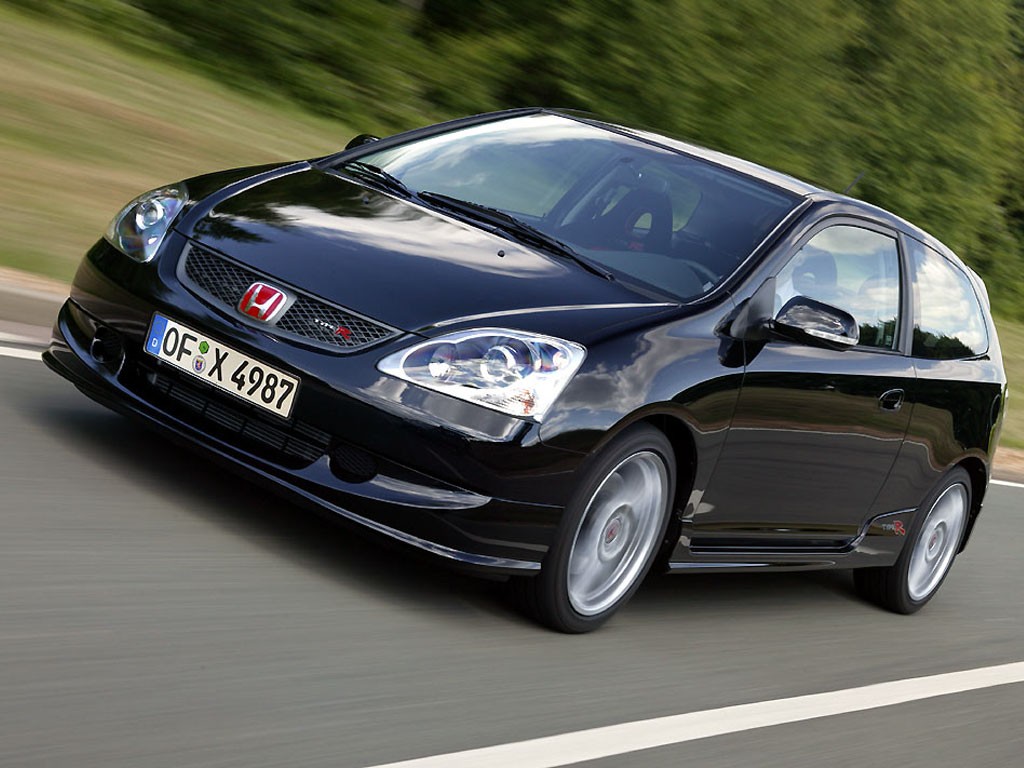
Honda Civic Fast Cars

The Honda Civic is a line of subcompact and subsequently compact cars made and manufactured by Honda. In North America, the Civic is the second-longest continuously-running nameplate from a Japanese manufacturer; only the Toyota Corolla, introduced in 1968, has been in production longer. The Civic, along with the Accord and Prelude, comprised Honda's vehicles sold in North America until the 1990s, when the model lineup was expanded. Having gone through several generational changes, the Civic has become larger and more upmarket, and it currently slots between the Fit and Accord.

It was introduced in July 1972 as a two-door coupe, followed by a three-door hatchback that September. With the transverse engine mounting of its 1169 cc engine and front-wheel drive like the British Mini, the car provided good interior space despite overall small dimensions. Early models of the Civic typically included a basic AM radio, heater, foam-cushioned plastic trim, two-speed wipers, and painted steel rims with a chromed wheel nut cap. As the years went by, it has become much more upscale with options such as air conditioning, power locks, power windows, leather upholstery, satellite-linked navigation, and a six-speed manual transmission. Initially gaining a reputation for being fuel-efficient, reliable, and environmentally friendly, later iterations have become known for performance and sportiness, especially the Civic Type-R, Civic GTi and Civic SiR.

The Civic has been rebadged for international markets with such models as the Honda Ballade and Honda Domani/Acura EL. The Civic platform also served as the basis for the CR-X sport compact, the CR-X del Sol targa convertible, and the CR-V compact SUV.

As of 2008, the Civic has been the top-selling car in Canada for eleven straight years.[4][5] With high gas prices and a weak economy in June 2008, the Civic supplanted the Ford F-Series to become the top-selling vehicle in the United States for that month.

Civic sales in Japan are ending with the gas version ended in August 2010 and hybrid in December.International versions and hybrids will continue to be manufactured for sales outside of Japan.

honda civichonda civic
honda civichonda civic runing
honda civichonda civic wonderful cars
honda civichonda civic wallpapers Read More...

Tuesday, November 9, 2010

SEMA 2010: Bisimoto Honda CR-Z is a 533-horsepower madhouse


The team from Bisimoto has taken to curing the Honda CR-Z hybrid of its anemia by prescribing massive doses of forced induction. The stock 1.5-liter four-cylinder was extracted and rebuilt using Arias pistons and a Bisimoto valvetrain, but the star of the show is that massive billet Turbonetics turbo. It shoves ample amounts of air through a 70-millimeter custom throttle body at a rate that has to rival most jet engines. The whole kit and caboodle is good for a staggering 533 horsepower, which helps explain why a car that started life with a 0-60 mph time of 10 seconds now requires a parachute to reduce its inertia.

Is this proof positive that the CR-Z has the kind of tunability that made the CRX legendary, or simply an example of cash conquering all handicaps? Read More...

SEMA 2010: Honda brings a surplus of custom CR-Zs


Honda has a grand total of 12 different CR-Zs on display at this year's SEMA show. In addition to the Mugen and Hybrid R we showed you earlier, the Japanese automaker has created the CR-Z with Genuine Honda Accessories and HPD CR-Z Racer, and eight other companies have put their spins on the compact hybrid hatch.

Big name companies like Bisimoto Engineering, DSO Eyewear, Eibach Springs, Fortune Motorsports and Konig Wheels have created their own one-off CR-Zs, accounting for a little less than half of Honda's overall showing. Two special project CR-Zs are on hand, as well, done up by the folks from Honda Tuning Magazine and the Los Angeles Auto Show.


[Source: Honda] Read More...

Monday, October 4, 2010

Paris 2010: Honda CR-Z gets Euro-cessorized

2011 Honda CR-Z with optional accessories

Honda's big introduction at this year's Paris Motor Show may have been the 2011 Jazz Hybrid, but that doesn't mean the Japanese automaker didn't bring some other automotive fodder for us to look at. Here, for example, is the new CR-Z hybrid hatch wearing some of Honda's optional visual accessories.

Honda is really trying to emphasize that the CR-Z is a sport hybrid. By adding things like larger wheels, a mesh grille, unique blue-tinged headlights, carbon fiber trim and a rear spoiler, the little hybrid's visual sportiness has indeed been improved without falling prey to the over-modded tuner look. This CR-Z may certainly look the part of a new-age hot hatch, but even the fanciest of body jewelry won't help the not-entirely-sporty and not-so-efficient hybrid powertrain under the hood. Read More...

Paris 2010: 2011 Honda Fit (Jazz) Hybrid greens up the place

2011 Honda Fit (Jazz) Hybrid

Ever since Honda debuted the Fit hatchback, we've said that it would be a perfect vehicle to have a gasoline-electric hybrid variant. Honda didn't exactly hear us loud and clear, however. First, we got the Insight, which isn't all that great, and then came the CR-Z, which is a peculiar blend of sport and efficiency.

Other markets, however, will now get a hybrid version of the Honda Jazz, the Euro-spec Fit. It uses the same Integrated Motor Assist mild hybrid system as the Insight and CR-Z matched with a 1.3-liter gasoline engine. After making its world debut at the Paris Motor Show this week, the hybrid Jazz will go on sale in Europe in the early part of 2011. Read More...

Thursday, September 16, 2010

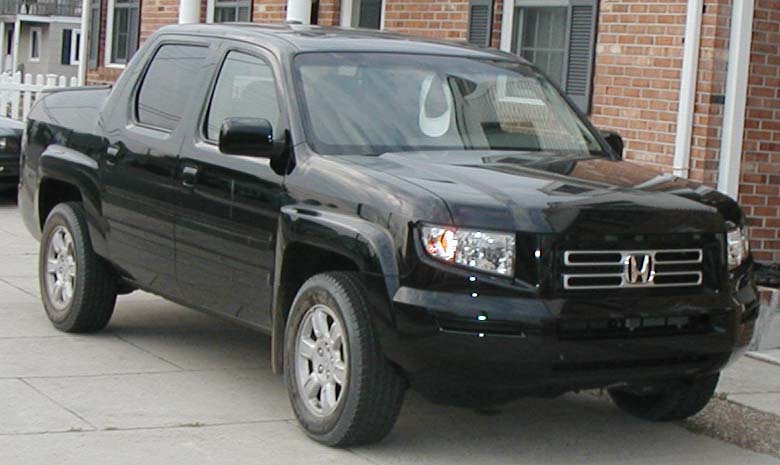
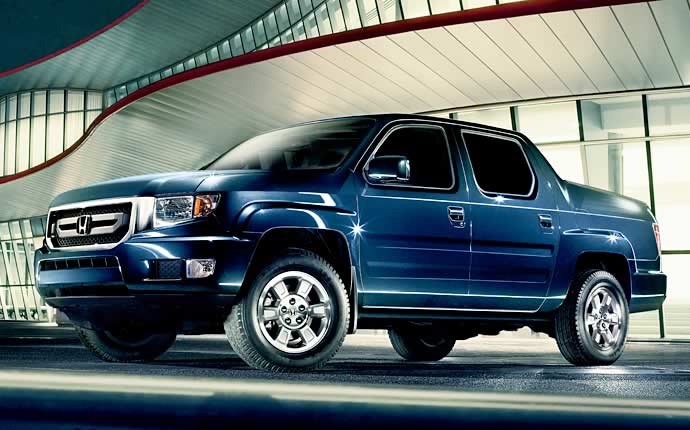
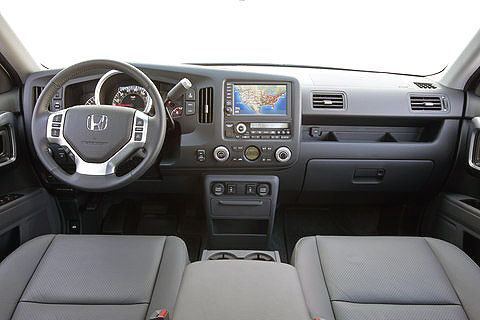
Honda Ridgeline pics

The Honda Ridgeline is a mid to full size sport utility truck produced by the Japanese automaker Honda. The Ridgeline was released in March 2005 as a 2006 model and is Honda's intended first foray into the North American pickup truck market. Until 2009, the Ridgeline was built in Alliston, Ontario, Canada alongside the Acura MDX, Honda Civic, Honda Civic Si, and Acura CSX. The Ridgeline was awarded Motor Trend's Truck of the Year for 2006. The Ridgeline is currently the only car-based pickup in the United States and Canada, although several precursors to the concept existed, going back as early as the 1957 Ford Ranchero, and most recently the Subaru Baja (discontinued in 2006).

Honda Ridgelinehonda ridgeline 2010
Honda Ridgelinehonda ridgeline photo
Honda Ridgelinehonda ridgeline pics
Honda Ridgelinehonda ridgeline reviews
Honda Ridgelinehonda ridgeline 2008 images
Honda Ridgelinehonda ridgeline 2010 pics
Honda Ridgelinehonda ridgeline gallery Read More...